
Foundation raising in Loma Linda CA - a level house, with the cause found first
Doors sticking, floors sloping or cracks climbing your walls? We find out why the house settled, then lift it back toward level.
- Licensed and fully insured.
- Free quotes on site.
- We reply within 1 business day.
What's involved in raising a settled foundation and leveling your house?
Foundation raising in Loma Linda, CA brings a settled house back toward level. On a slab house, the slab is lifted on piers driven down to soil that can carry the weight, and on a raised pier-and-beam house, the piers are shimmed or replaced from the crawl space. It usually comes with digging along the foundation, dealing with whatever let the ground move, and sometimes a driveway or walkway that sank along with the house. We're based in Loma Linda and take jobs across many of the cities around it.
Most people call because something in the house has changed: a door that won't latch, a crack running up from a window corner, a floor they can feel slope underfoot. What the job costs and how long it takes turn mostly on what your house sits on and how far it has dropped. A slab house costs more to level than a pier-and-beam house because the slab has to be lifted on piers driven to firm soil, and the more piers it needs, the longer the work runs. How easily we can reach the foundation matters too, so I'll come out, look at the house myself and leave you a written estimate that says what the price covers.
How can you tell your house has settled?
Doors that stick or won't latch
A door that used to close fine now rubs at the top or won't latch, or a window binds halfway up, because part of the house has dropped and pulled the frame out of square. Waiting usually lets that corner keep moving, and the longer it goes, the more trim, drywall and flooring there is to fix after the lift.
Cracks from door and window corners
Diagonal cracks running out from the corners of doors and windows, inside or in the stucco outside, usually mean one part of the house is moving differently from the rest. A hairline crack can be harmless, but one that keeps opening is worth having looked at before it widens further.
Floors that slope or dip
If a marble rolls to one side of a room or furniture sits on a tilt, the slab or the piers under that part of the house have usually settled. Floors don't level themselves, so the dip tends to deepen and the lift needed later gets bigger.
Work that often comes with leveling
Concrete cutting
When we need to reach the foundation through a patio, walkway or garage floor, a clean saw cut keeps the damage to the part we open.
Concrete driveway building
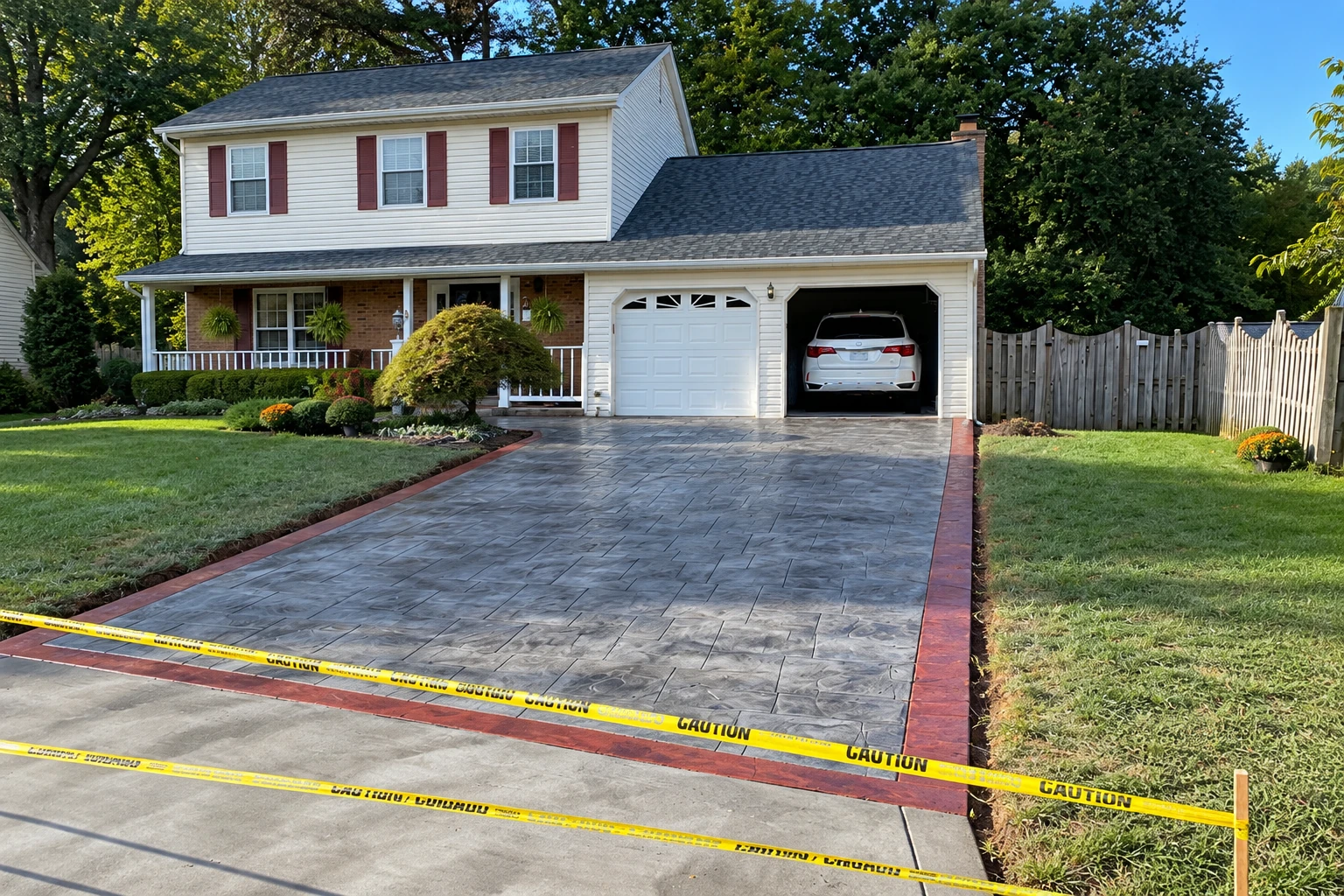
A driveway that dropped or cracked along with the house, or one that sends rainwater back toward the foundation, is often worth replacing once the house is level.
How we approach foundation raising
Before we talk about lifting anything, I look for why the house settled, because leveling a house and leaving the cause in place tends to mean doing it again. Then I walk the property with you to see how much room the equipment needs, since piering takes space for digging gear, trucks and hydraulic equipment and has to get close to the house. On a raised house, the work happens from the crawl space, shimming or replacing the piers that carry the floor. On a slab, piers go down along the foundation to soil that can carry the weight, the slab is lifted on them, and the gaps that open underneath get filled, often with polyurethane foam. Foam is sometimes offered as the whole fix, but one foam maker says itself that foam isn't always the answer and may not be an option where settling is severe, which is where that same maker points to push piers instead.
Reaching the foundation sometimes means opening up a patio, walkway or garage floor, and concrete cutting lets us take out only the piece we need and patch it cleanly afterward. If your driveway sank with the house or tips water back toward it, we can talk about building a new concrete driveway once the house is level, so the new slab sheds water away from the foundation.
Shimming or replacing piers
This suits a raised house with a crawl space, where the floor sits on piers we can reach from underneath. Settled piers are shimmed back up or replaced, so the work stays mostly under the house.
Push piers for a badly settled slab
Push piers are driven down hydraulically until they reach very dense soil or rock, and then the foundation is lifted on them. They suit a slab house that has dropped a long way.
Helical piers
Helical piers are steel shafts with screw-shaped plates, turned into the ground with hydraulic equipment, and the force it takes to turn them in tracks how much weight each one can bear. That suits a slab where you want each support to show it's holding as it goes in.
Get a written estimate for your settled house
We reply within one business day to set a time for me to see your house, and the estimate is free with no obligation. You're welcome to call (909) 760-1346 instead.
Call (909) 760-1346Why Loma Linda homeowners call Loma Linda Concrete about a settled house
I look at every house myself
I come out to every job, look at the house and write the estimate myself, and then I work on site with our small crew while they do the job. The person who explained what to expect is the one standing there when it happens.
Licensed and insured before we dig
We're licensed and fully insured, and I'm glad to go over that before any equipment comes onto your property. Raising a house means digging beside it and lifting its weight, so you should know who carries the responsibility.
Much of our work comes from referrals
I started out pouring walkways and small patios for neighbors and opened this business in 2023, and many of our calls come from people we've already worked for. A crew that depends on word of mouth has every reason to explain the job honestly before it starts.
On a settled house, the first job is finding out why it moved. Send us a request or call (909) 760-1346, and I'll come take a look.
What happens after you call about leveling your house?
Call or send a request
Thank you for reaching out, by phone at (909) 760-1346 or through the form. We get back to you and set a time that suits you for me to come out.
I walk the house with you
I look at the floors, walls and ground around the house and ask what you've noticed and when it started. You get a written estimate that sets out what the price covers, so no part of the job is left to guesswork.
We sort out permits and lift
Once you're ready, we take care of the permit side if the city requires one, then dig where the work needs it and bring the house back toward level. Expect noise and open ground around the house while that's underway.
We walk the finished work
When the lifting is done, we fill in, put back what we opened and clean up. Then I walk the house with you so you can check the floors and doors for yourself.
Common questions
How much does it cost to level a house in Loma Linda?
Leveling a house across the US usually costs about $3,500 to $30,000 per house, and that's the general market range, not our price. Where yours falls turns on the foundation type and the number of piers mentioned above. I'll give you a written estimate once I've seen the house.
How long does foundation raising take, and can we stay home during it?
Shimming a pier-and-beam house typically takes 1 to 3 days, and underpinning a slab typically takes 3 to 7 days depending on how many piers go in. You can usually stay in the house the whole time, though slab work is noisy and involves digging around the outside of the house.
Will my house need to be leveled again after foundation raising?
A house that's leveled properly on stable soil shouldn't need it again, so there's no upkeep schedule to follow. When a house does need it again, a cause was usually left in place, such as drainage soaking the soil, a footing that was too small, or settling that needed piers and got shims instead.
Which California license covers raising a house foundation?
The state's contractor license board describes the C-21 building moving and demolition contractor as one who raises, lowers and underpins structures, including their foundations. When you compare contractors for this work, it's fair to ask each one which license they hold.
Do I need a permit to raise my foundation in Loma Linda?
That's the city's call, and Loma Linda's Building and Safety office is where the building permit application comes from. We check with that office instead of guessing, and if your job needs a permit, I tell you at the estimate and we take care of the application. The office also runs a separate line for inspection requests.
How do I check if my Loma Linda house is in an earthquake hazard zone?
Type your address into the state's EQ Zapp map, which shows whether a property lies in a mapped earthquake hazard zone. It also shows when the state hasn't evaluated an area yet, so you'll know whether your answer is no zone or not studied. It's a quick lookup you can do before I come out.
Book a look at your settled house
Have your address handy and tell us whether the house sits on a slab or a raised pier-and-beam floor, so I come out knowing what kind of work we're likely talking about.